
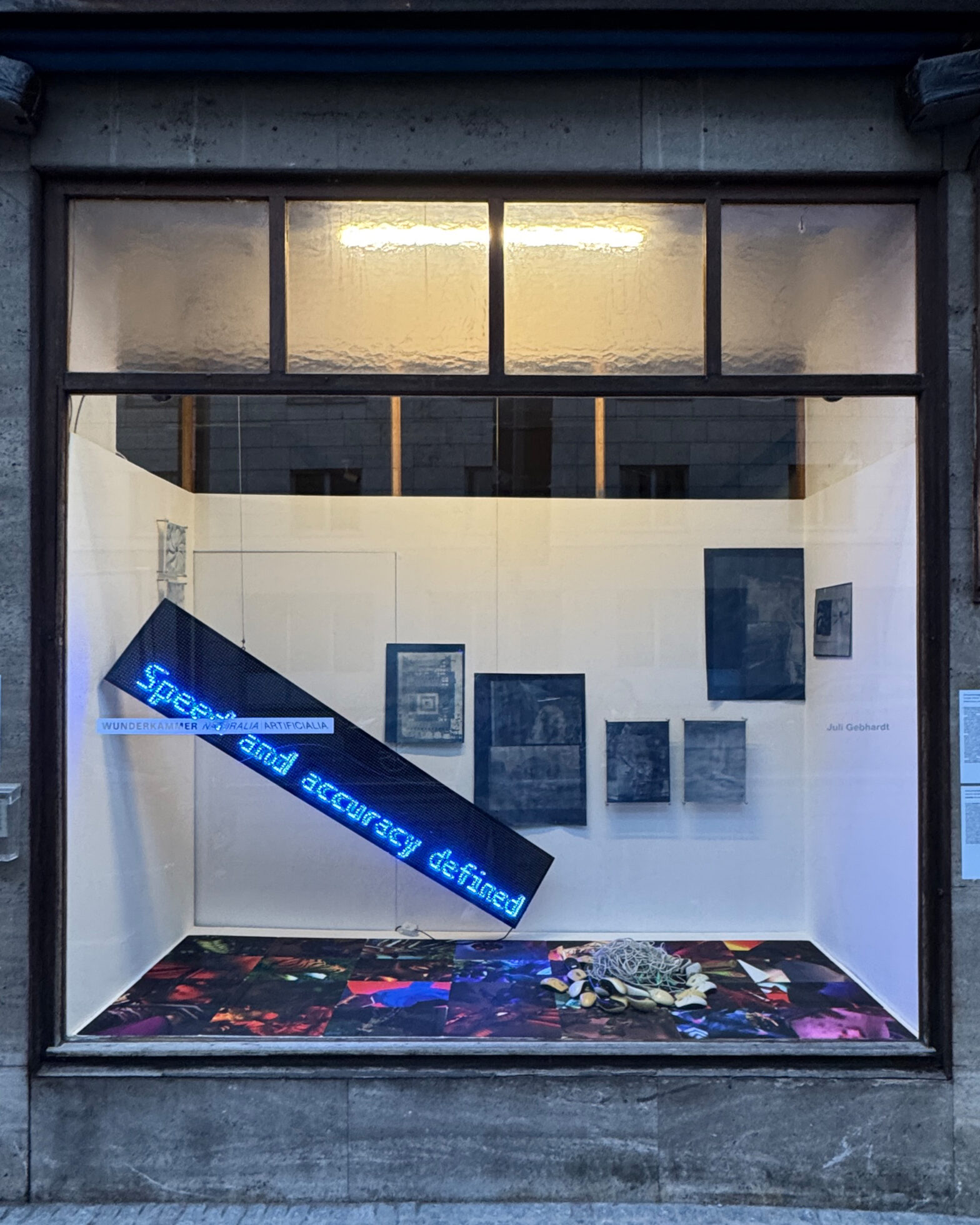
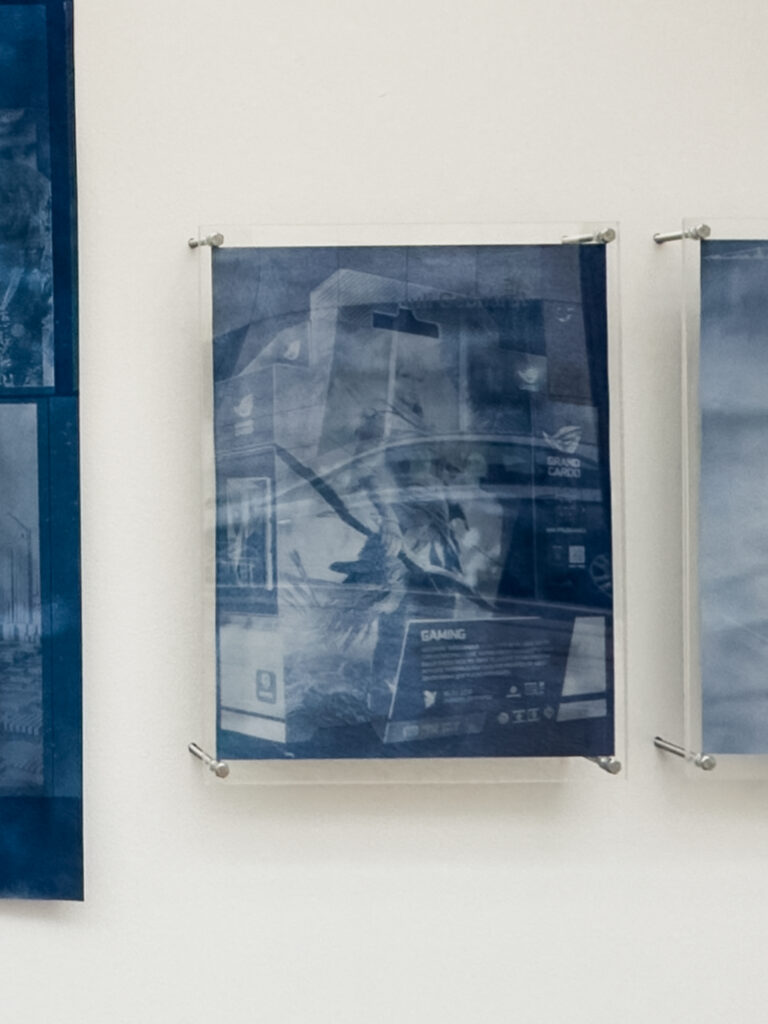
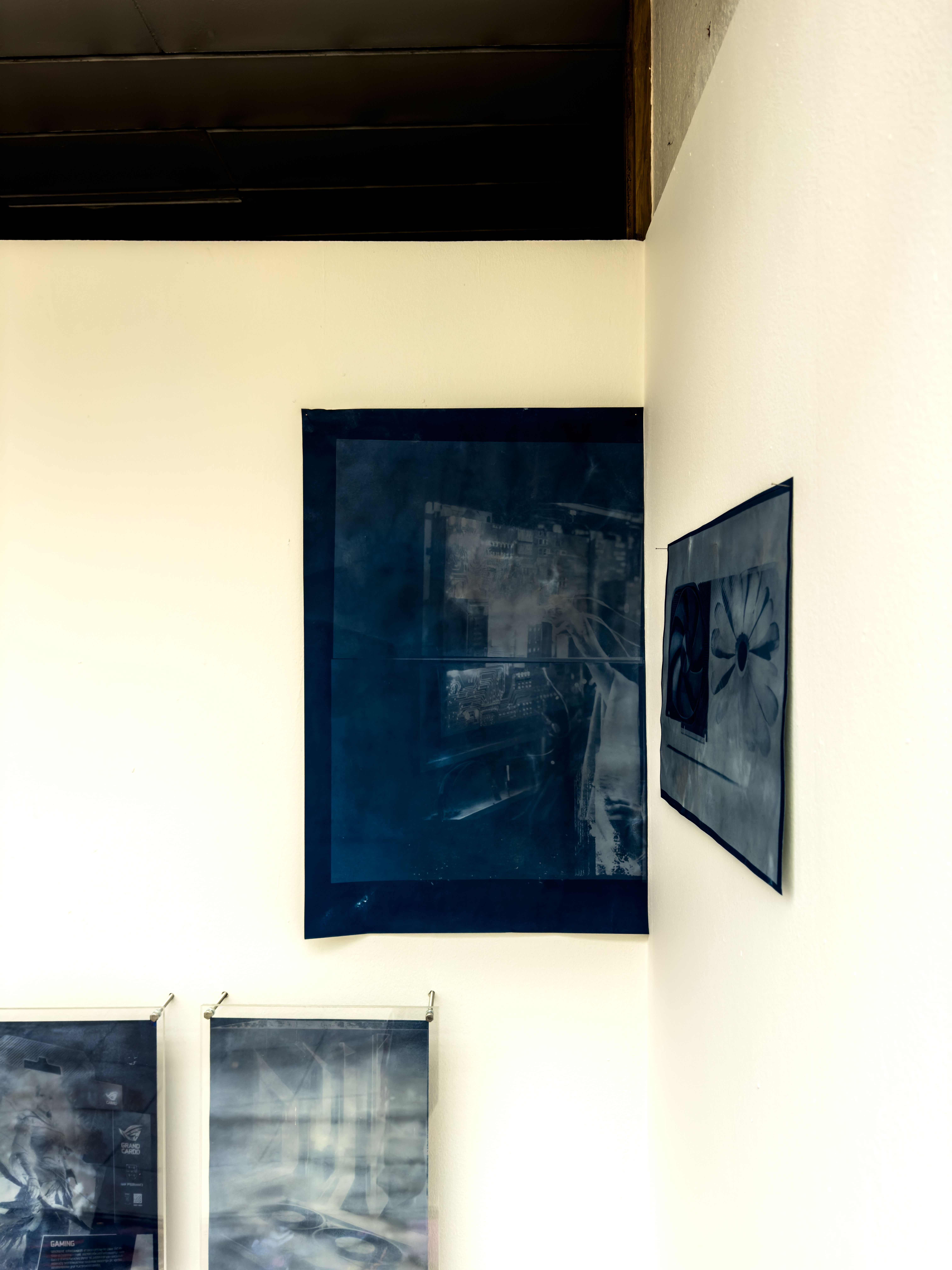
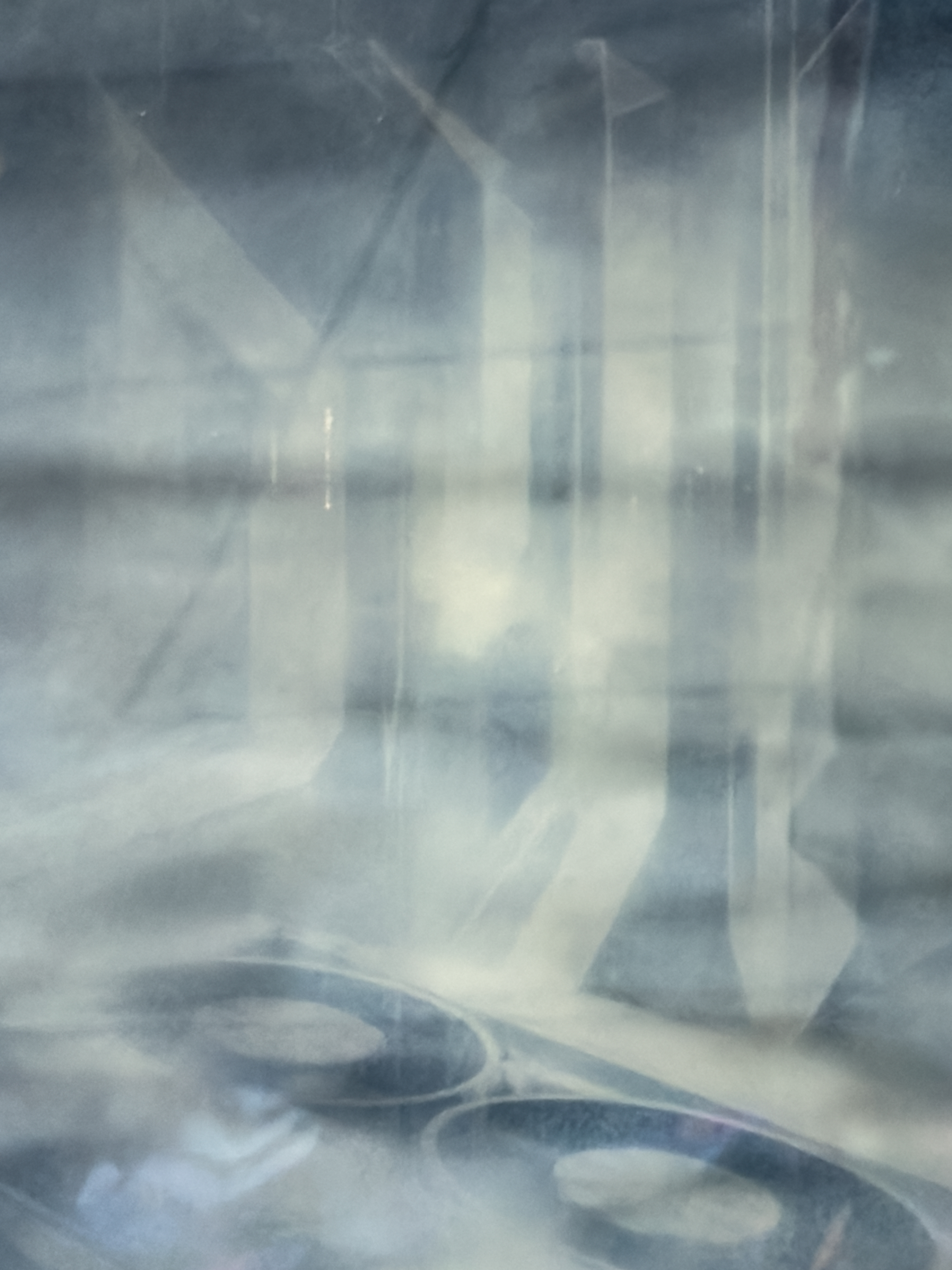

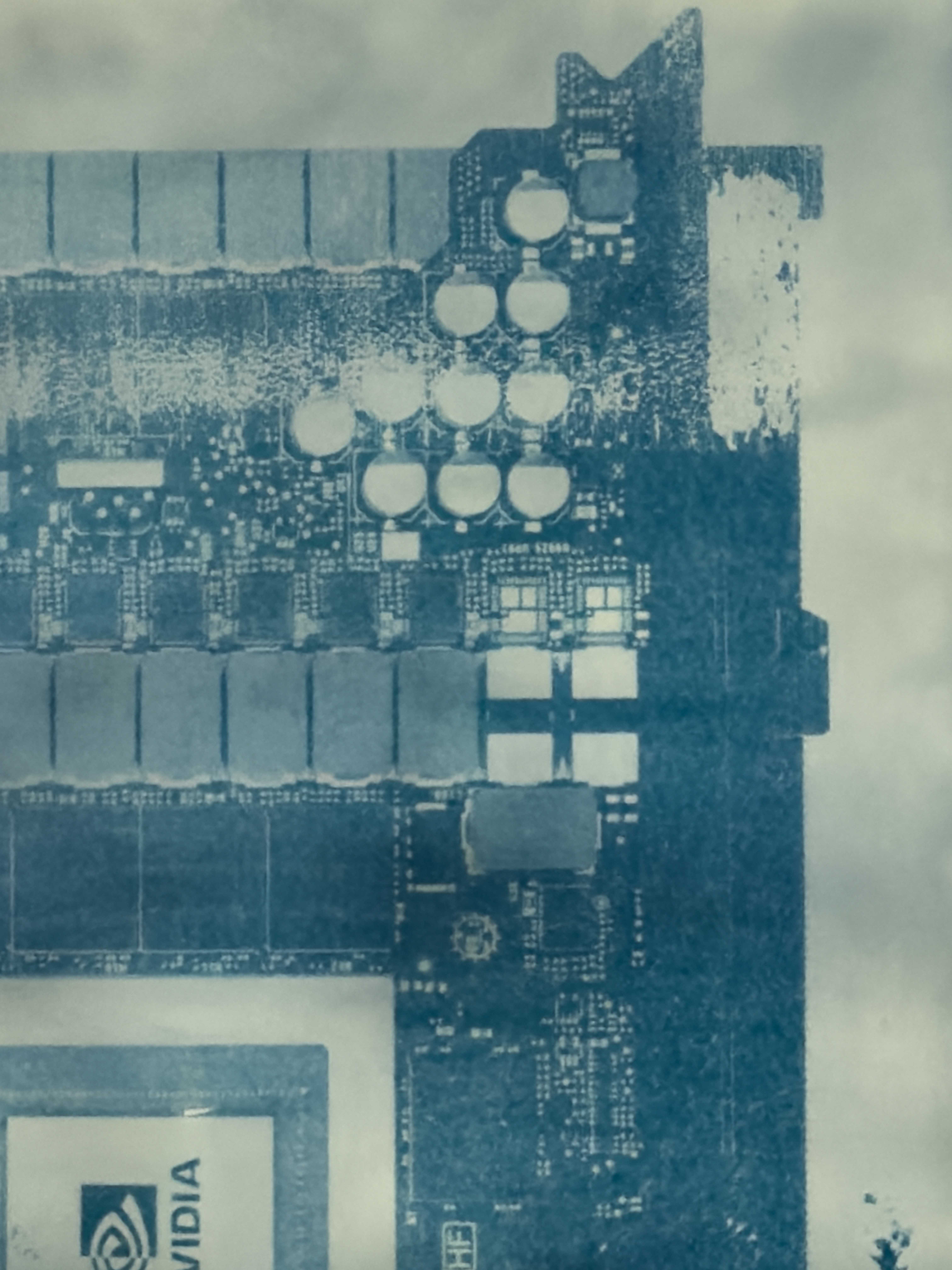
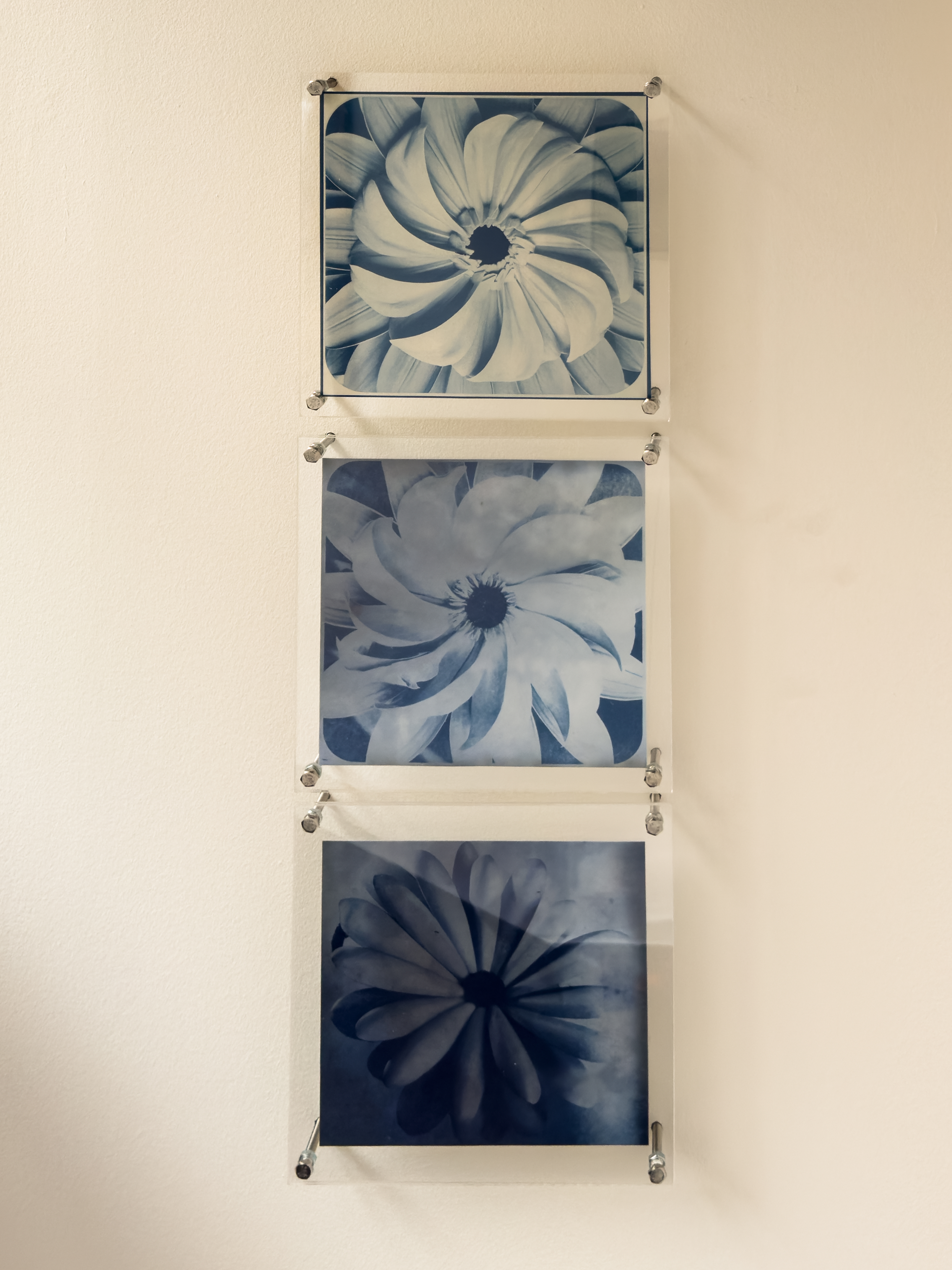
G-Force, Cyanotype, sales display, 2025

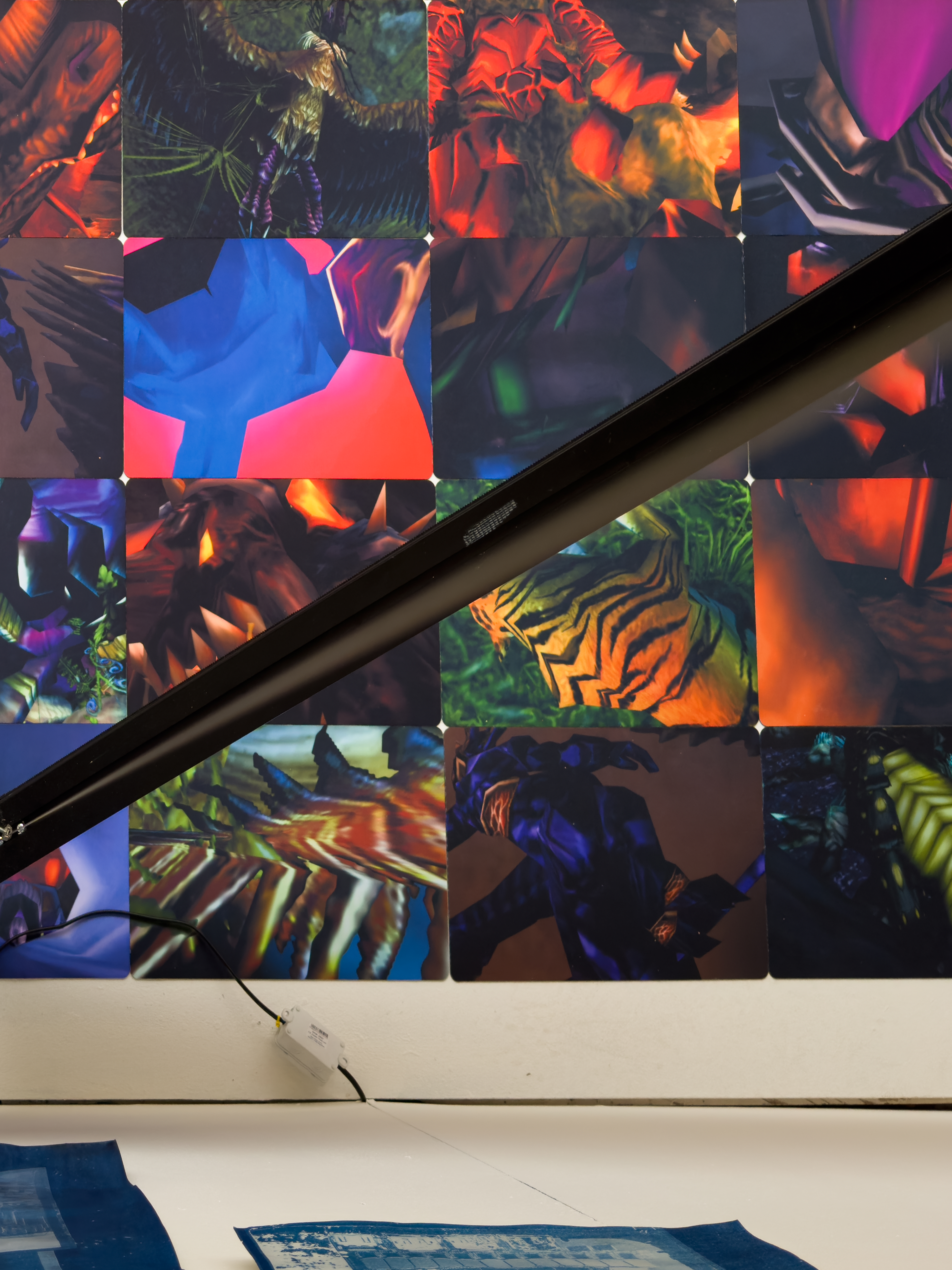
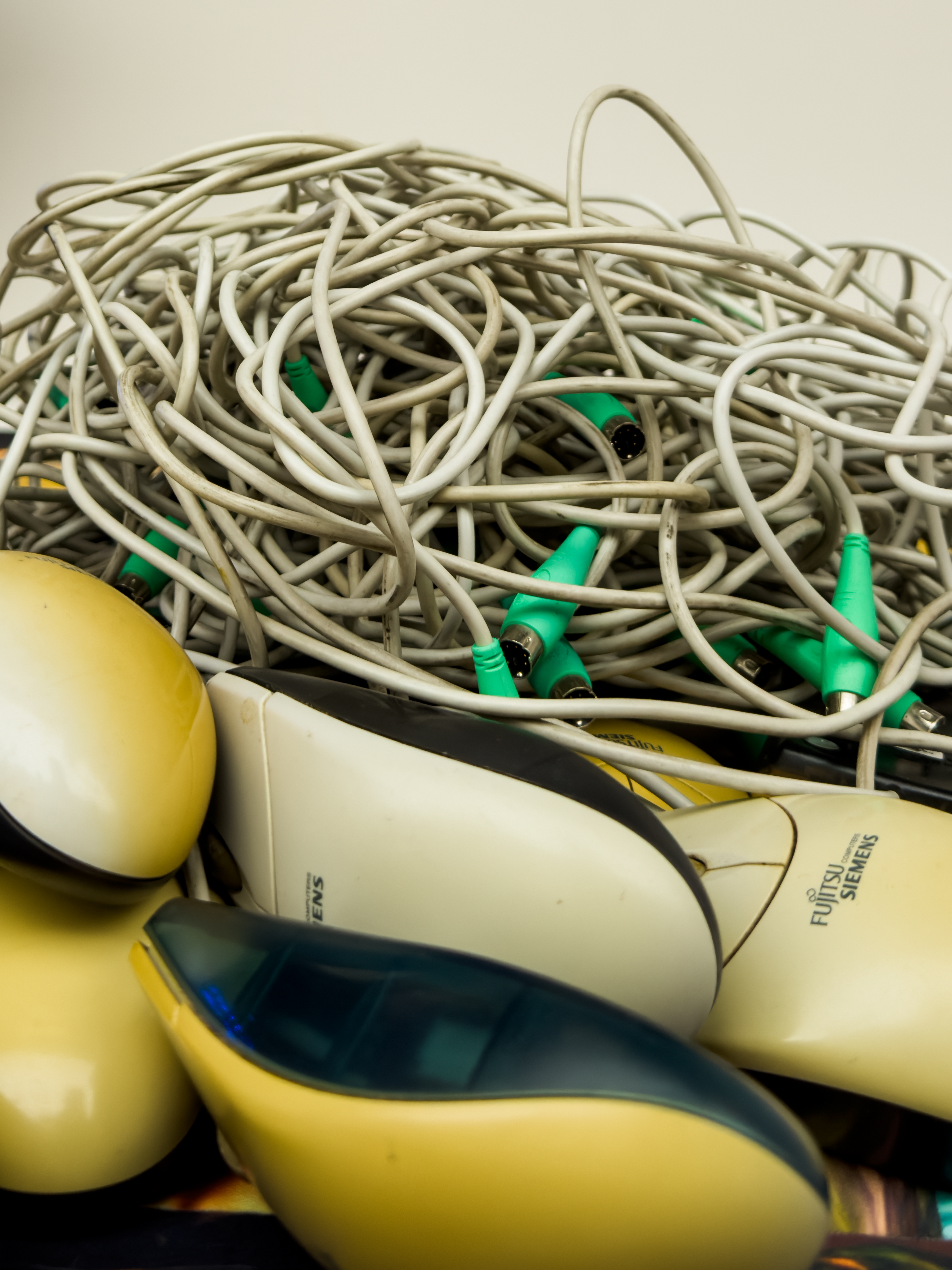
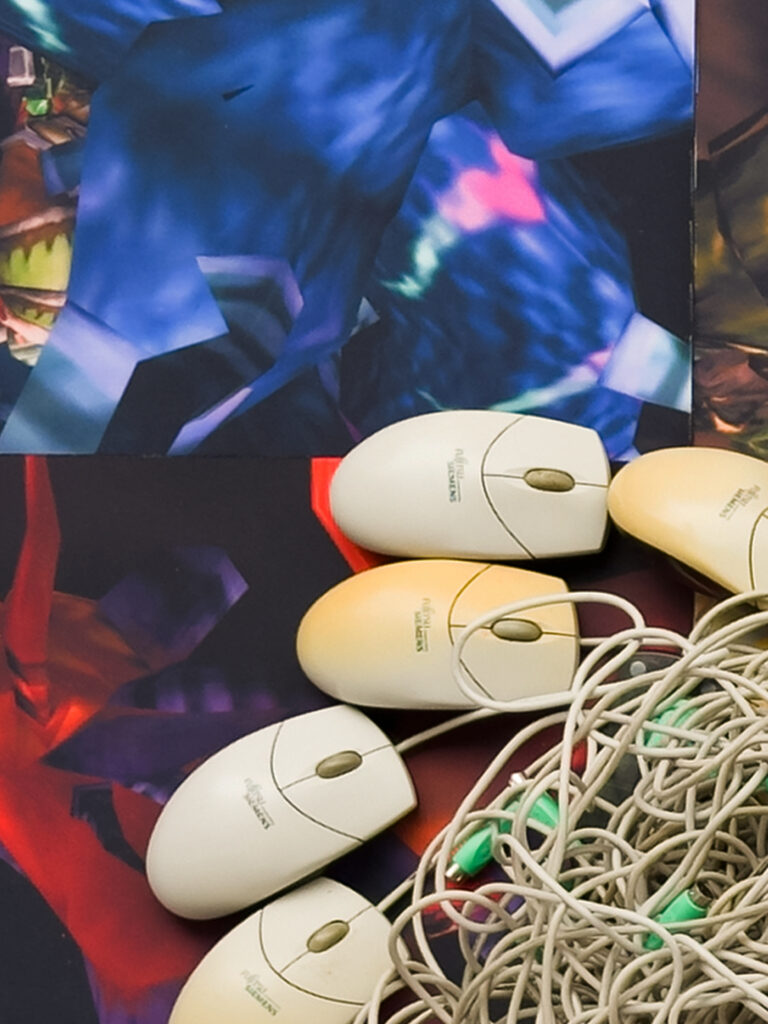
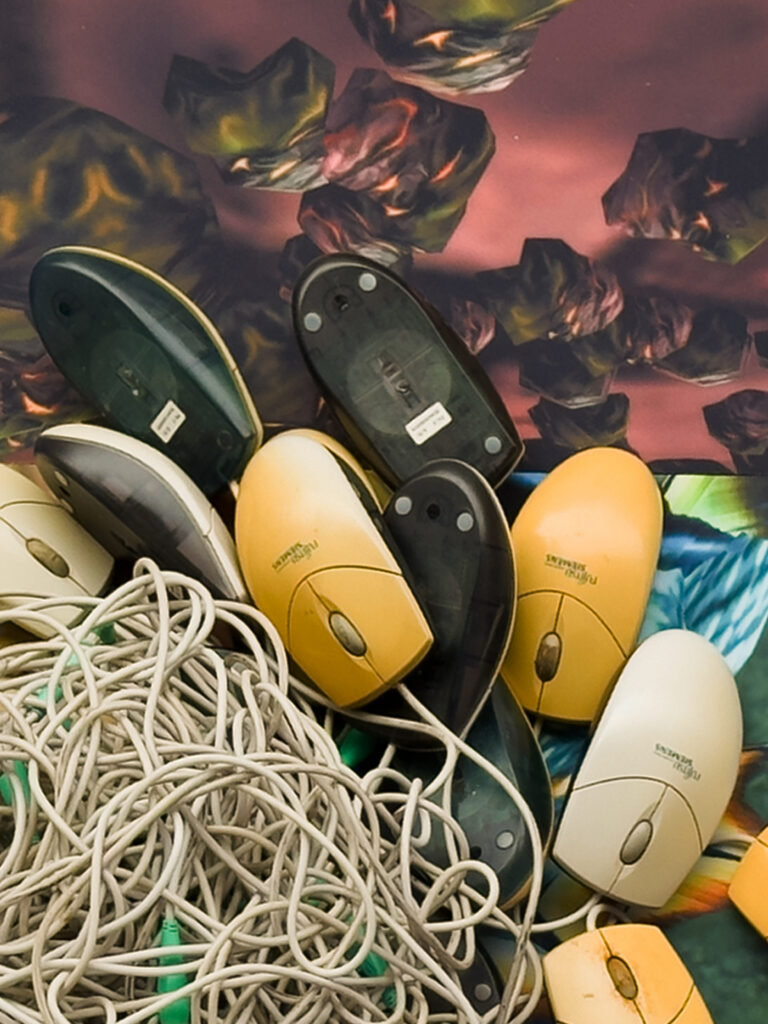
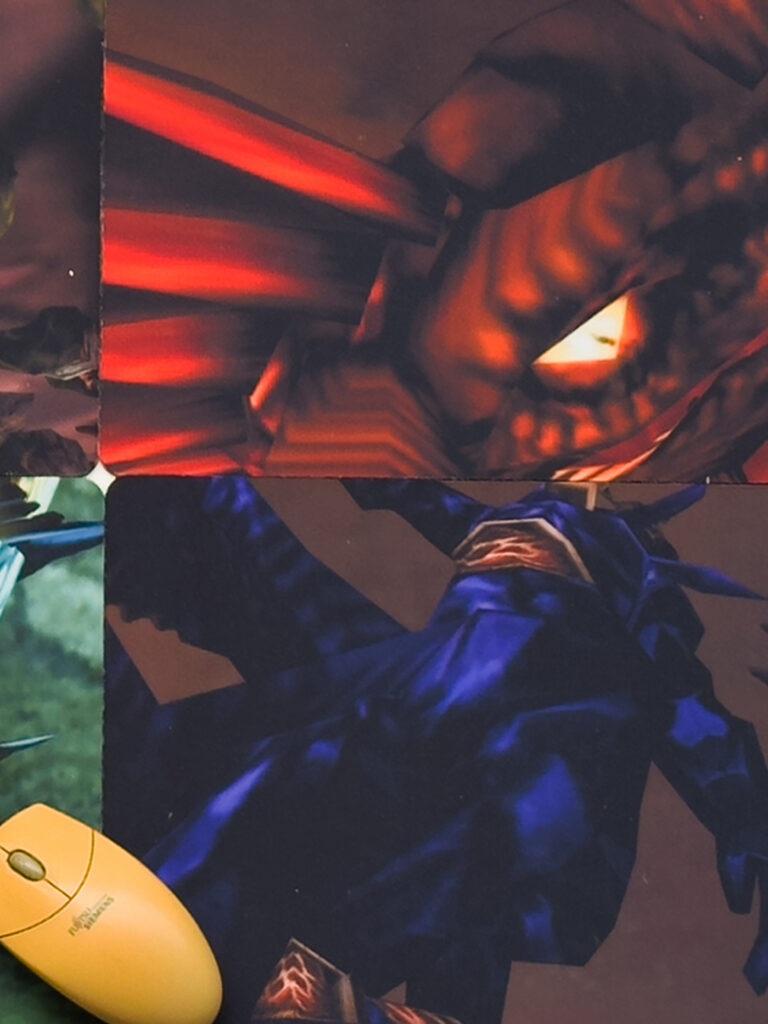
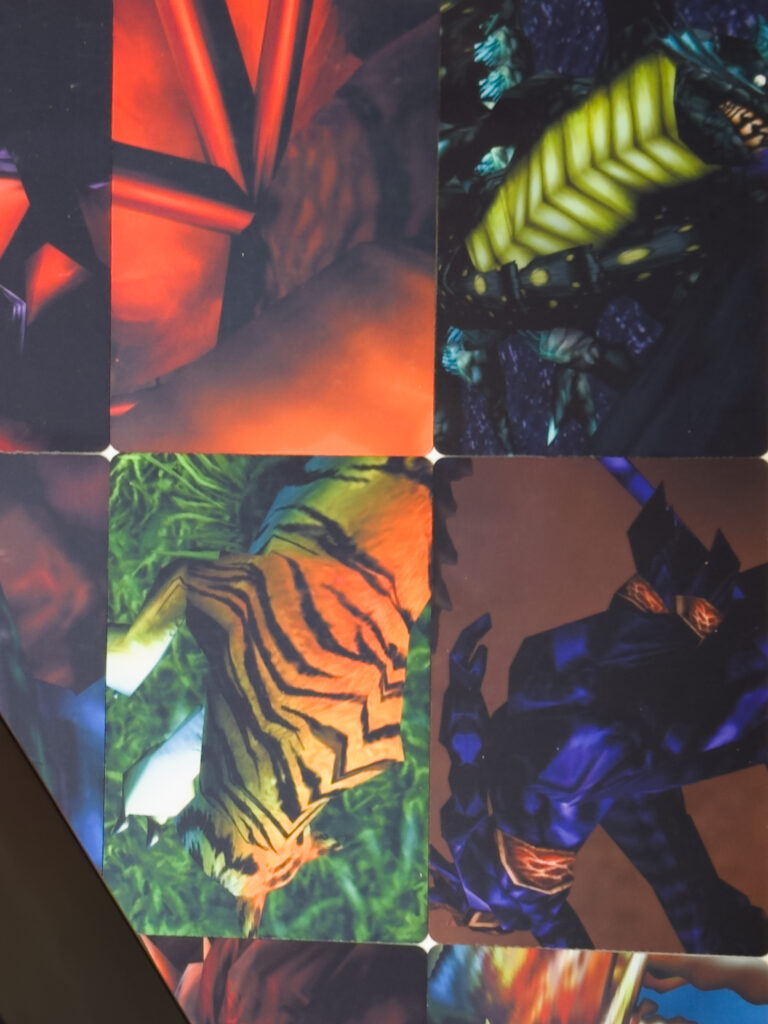
Rattenkönig, Mouse pads with digital print, computer mice (FSC Logitech M-S69 PS/2), 2023
G-Force
Rapid technological progress leaves its mark – not only on the way we work, consume and play, but also on our understanding of performance and utility, future and transience, innovation and nostalgia.
For a long time, in the world of computer games, better graphics were synonymous with better games. Progress was measured in pixel count, and increasingly realistic surfaces and light simulations promised higher quality. However, a counter-movement grew in parallel: Fans and developers* who consciously decided against photorealistic representations and instead opted for the style of retro gaming – with pixelated sprites, simplified shapes and stylized aesthetics.
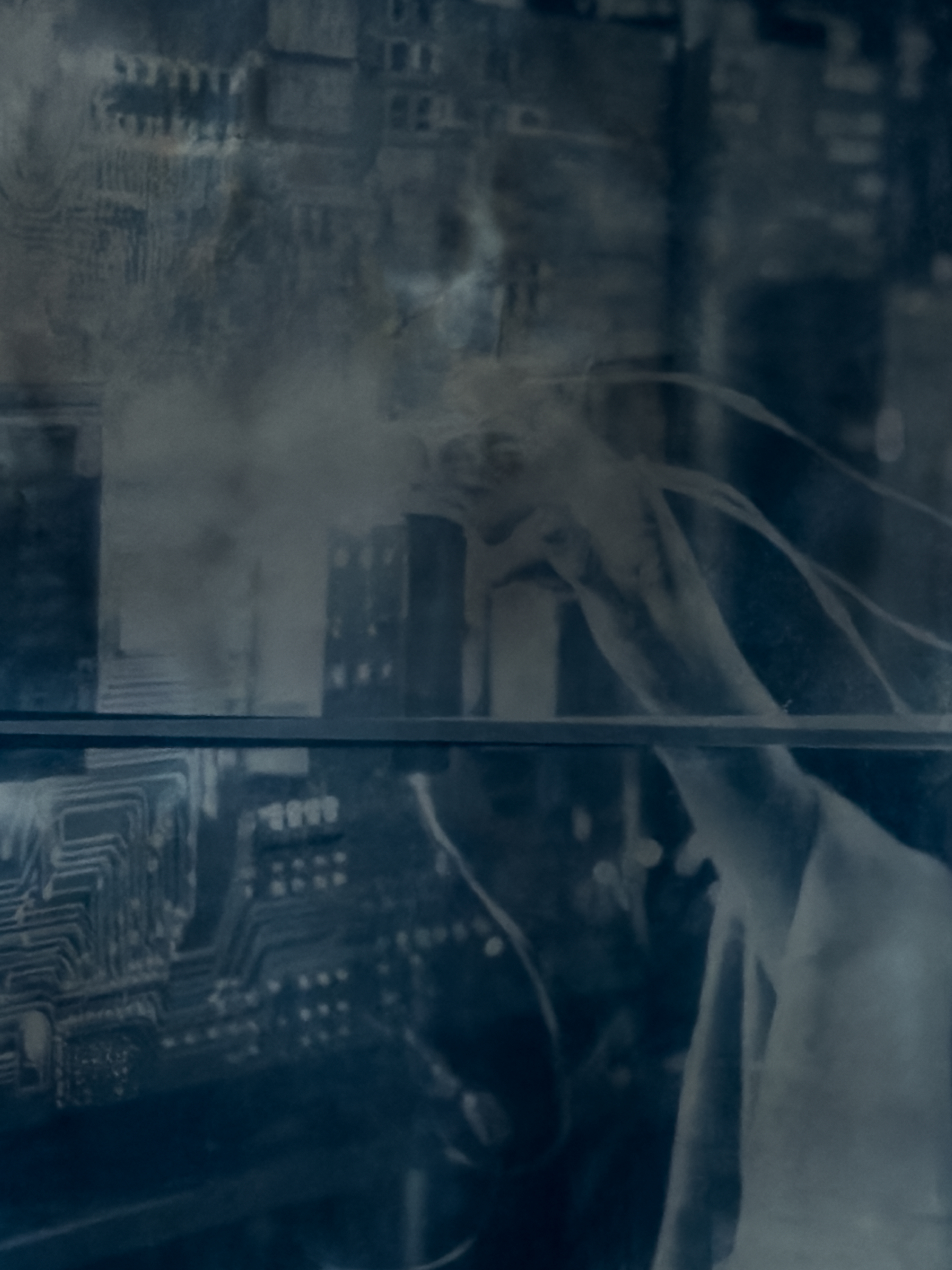
In her work G-Force, Juli Gebhardt explores the transformation of the graphics card industry, which has moved from the gaming market to the center of the AI hype. Companies such as NVIDIA, once known primarily for their powerful graphics cards for computer games, are now key players in the development of artificial intelligence and provide the computing power for machine learning and neural networks. The transformation of GPUs – from tools for simulating virtual worlds to engines for artificial intelligence – illustrates how technologies are constantly taking on new meanings and often losing their original contexts in the process.
The artist reflects this development by generating packaging of gaming graphics cards using artificial intelligence, blurring the boundaries between real product and digital artifact. The designs appear as if they were relics of a technological past that has only declared the future.
The objects oscillate between documentation and fiction, between consumer products and contemporary testimony.
How are visual aesthetics, consumer behavior and cultural values interwoven? While ever more powerful hardware is being produced that enables photorealistic representations, the desire for a conscious reduction, for pixelated, stylized worlds that oppose the imperative of technical perfection, is growing in parallel. This tension between technological upgrading and the longing for a different, perhaps more manageable digital world forms a central undertone in G-Force.
The work Rattenkönig refers to the archaic, neoliberal structures of video games. It consists of 42 mousepads on which screenshots or in-game photographs of hunted creatures from the video game World of Warcraft (2004), a so-called “massively multiplayer online role-playing game”, are printed. The creatures were shot by the artist’s avatar with a bow and arrow. She now presents their digital skins in the installation like trophies from hunted animals. In addition, 42 knotted, discarded computer mice from an office clearance are draped on the mouse pads, giving the impression of a carcass, similar to a rat king. A rat king is an unusual formation in which a group of rats are intertwined by their tails. The exact cause of the formation of a rat king is not fully understood, but it is thought to be a rare event that can occur in certain conditions, such as confined and dark habitats. The yellowed, worn computer mice, on the other hand, bear witness to the thousands of hours they have been in use, acting as an interface between the analog and digital worlds of work. (Text: Hannah Eckstein)
With the kind support of Rosspartner Werbetechnik, Ritter Sport, GEISTUNDGELD e.V., SV SparkassenVersicherung, Wüstenrot Stiftung and Kulturamt Stuttgart