
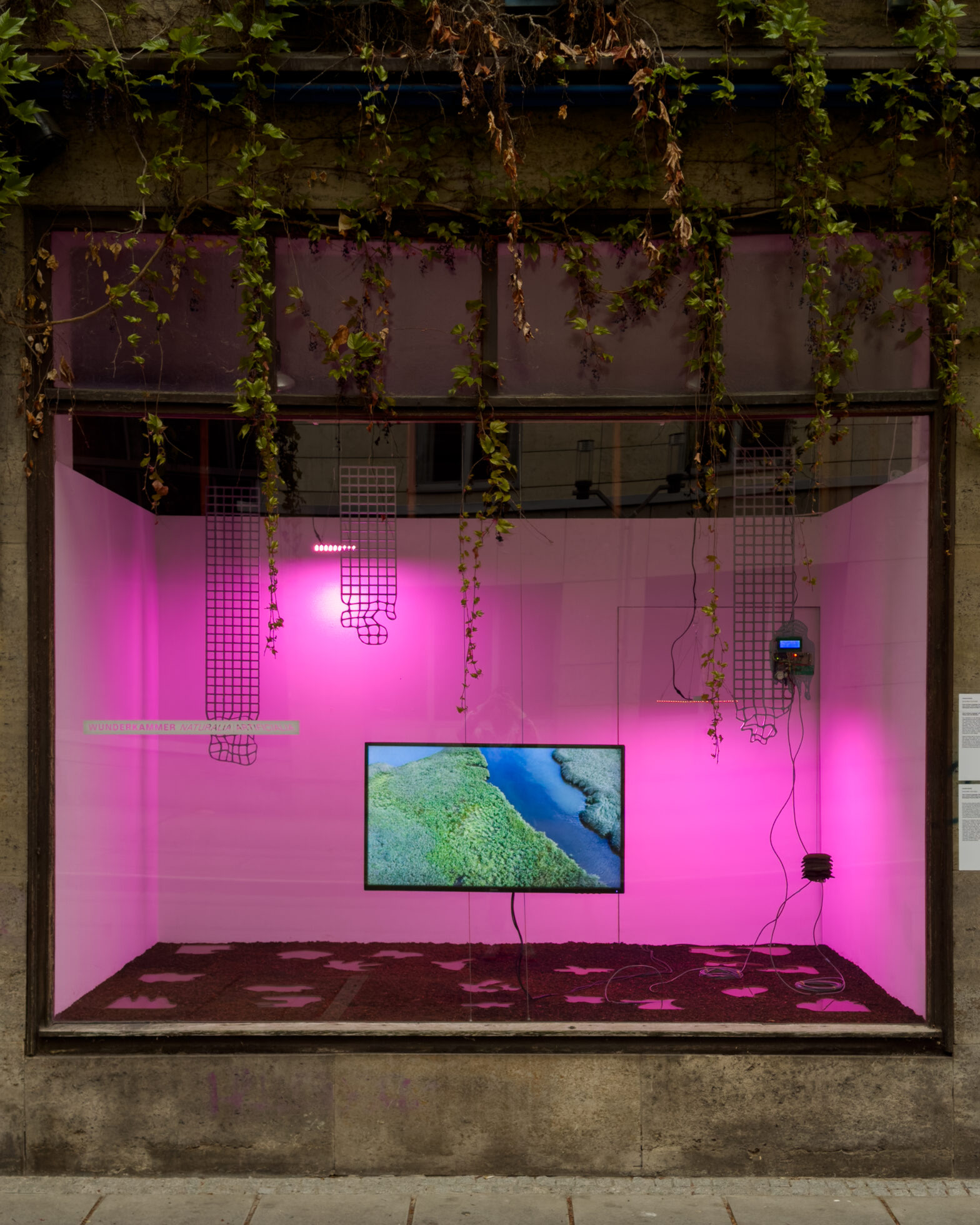
“And, like snakes, the roots of trees
Coil themselves from rock and sand,
Stretching many a wondrous band
Through the stones and heather springing,
Brook and brooklet haste below;”
– fragment from Goethe’s Faust when a ghost light emerges in the story
Swamps, moors and wetlands: in both historical and contemporary stories, they are often the symbolic setting for sinister events; a place of mischief and mystery. For instance, the ghost lights created by the slow ignition of swamp gasses often fulfills the role of spirits in sagas and myths because of its mysterious form. Or think of the macabre phenomenon of bog corpses being mummified by the preservative effect of the peat soil. At the same time, wetlands are associated not only with death, but above all with life. They harbor a very diverse ecosystem that plays an important role in the context of climate change as carbon sinks and storm buffers.
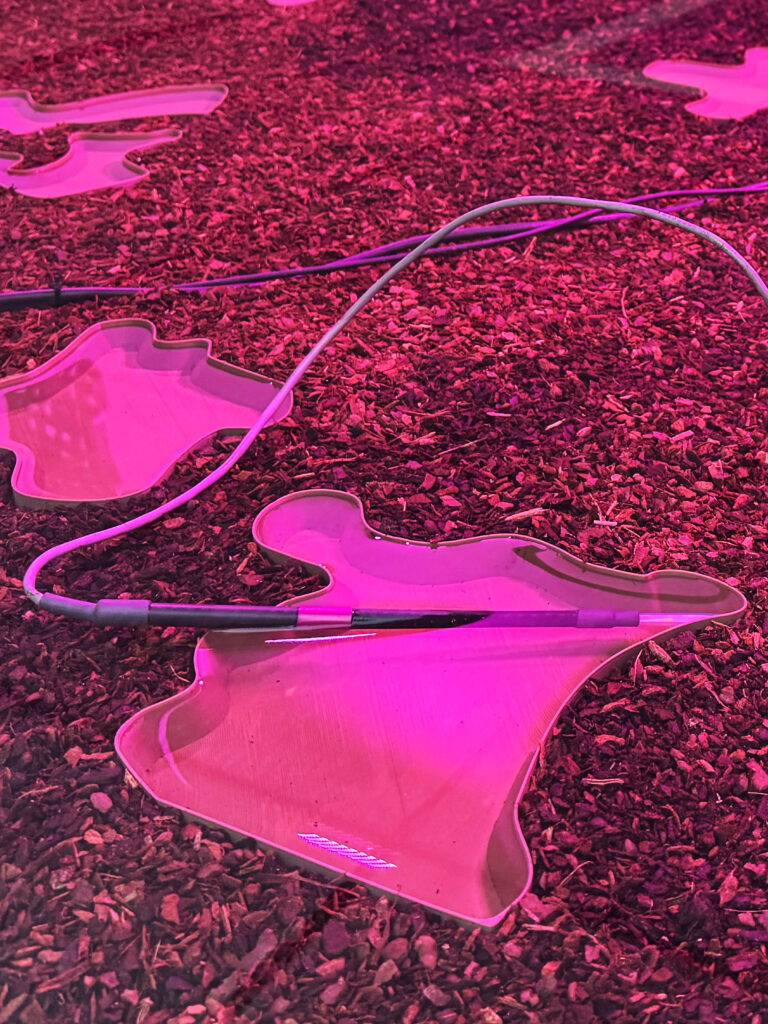
The landscape Eeraerts and Aparicio Ronda create in their exhibition is inspired by the Kirkpatrick Marsh in Maryland in the United States. In this marsh, scientists from the Smithsonian Environmental Research Center (SERC) are studying how plant and animal species respond to fluctuations in CO2, temperature, nitrogen, methane and sea level rise. Global climate changes are manipulated in architecturally specific and automated infrastructures to replicate the situation of the next century, in anticipation of a new reality.
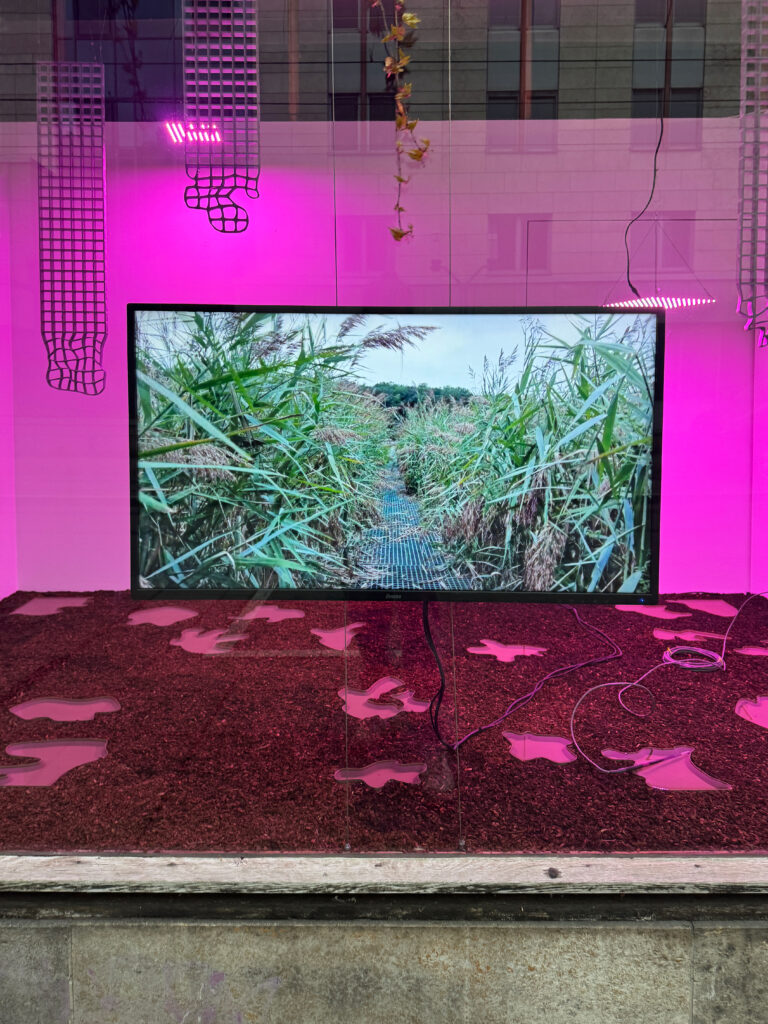
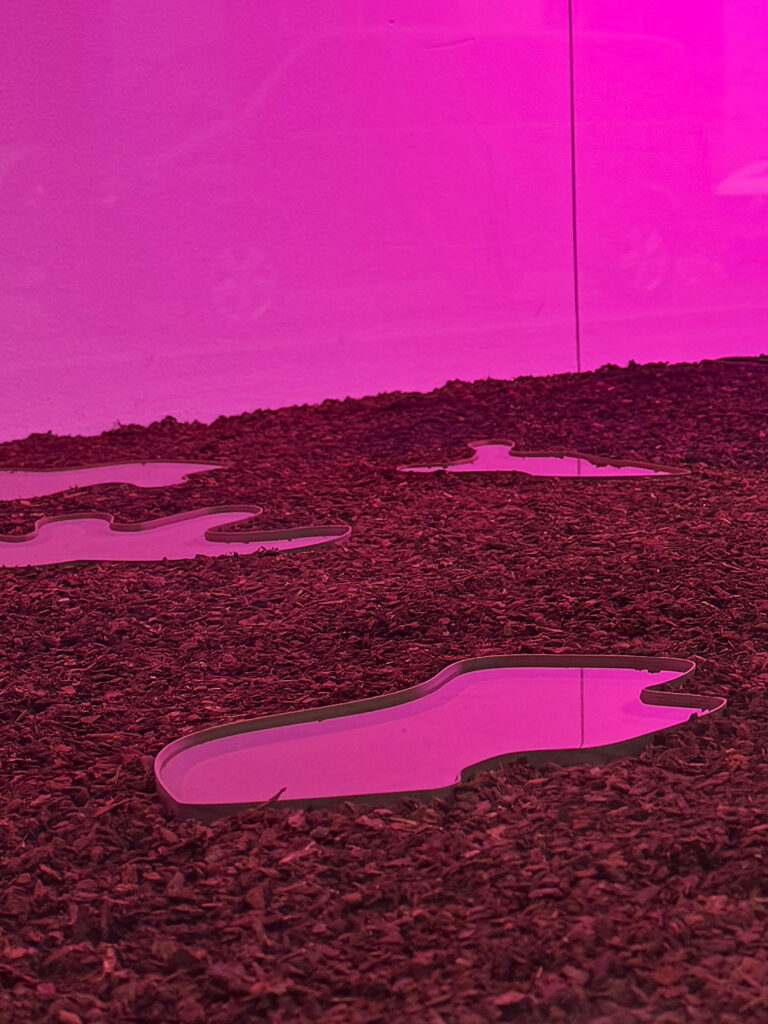
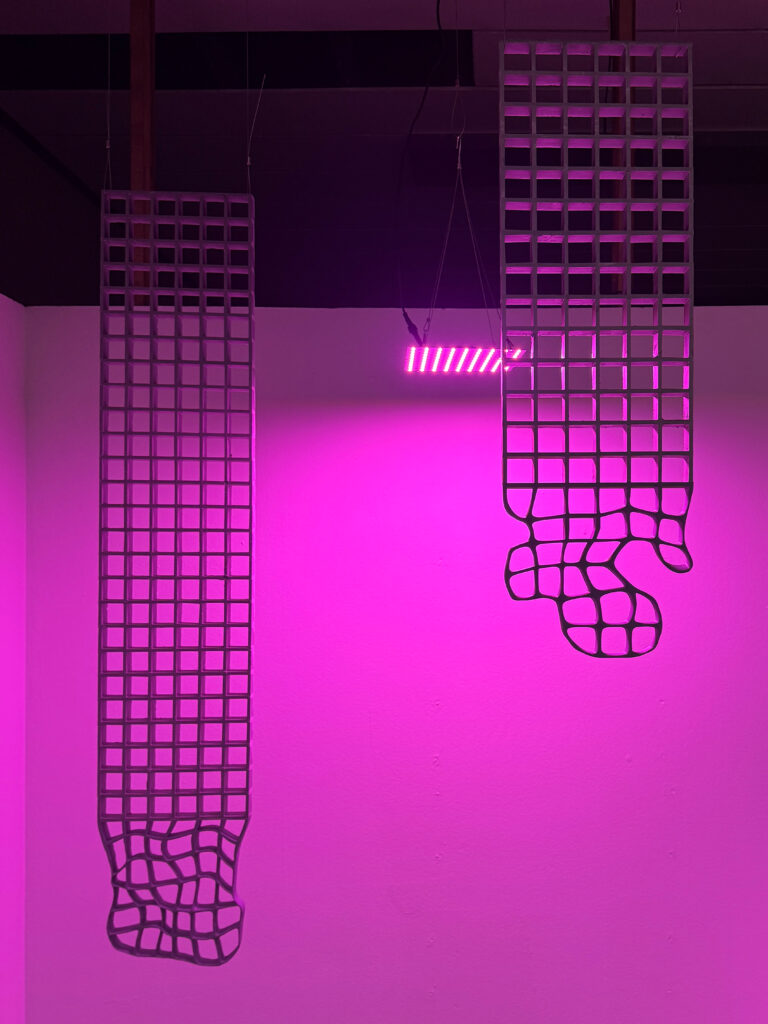
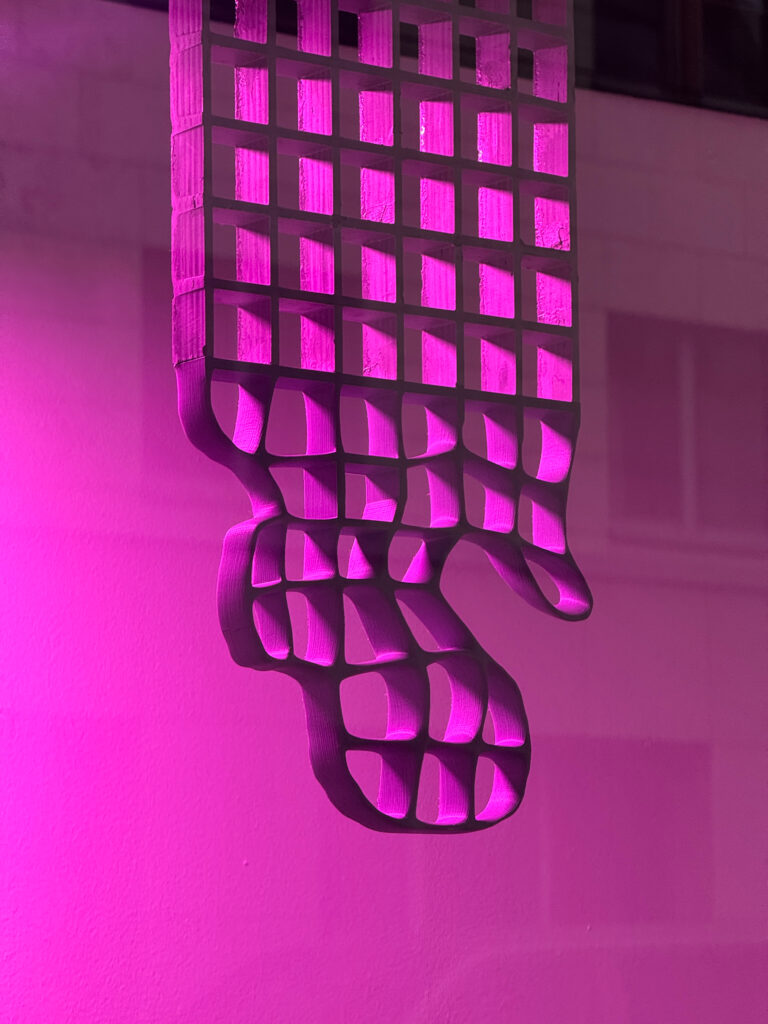
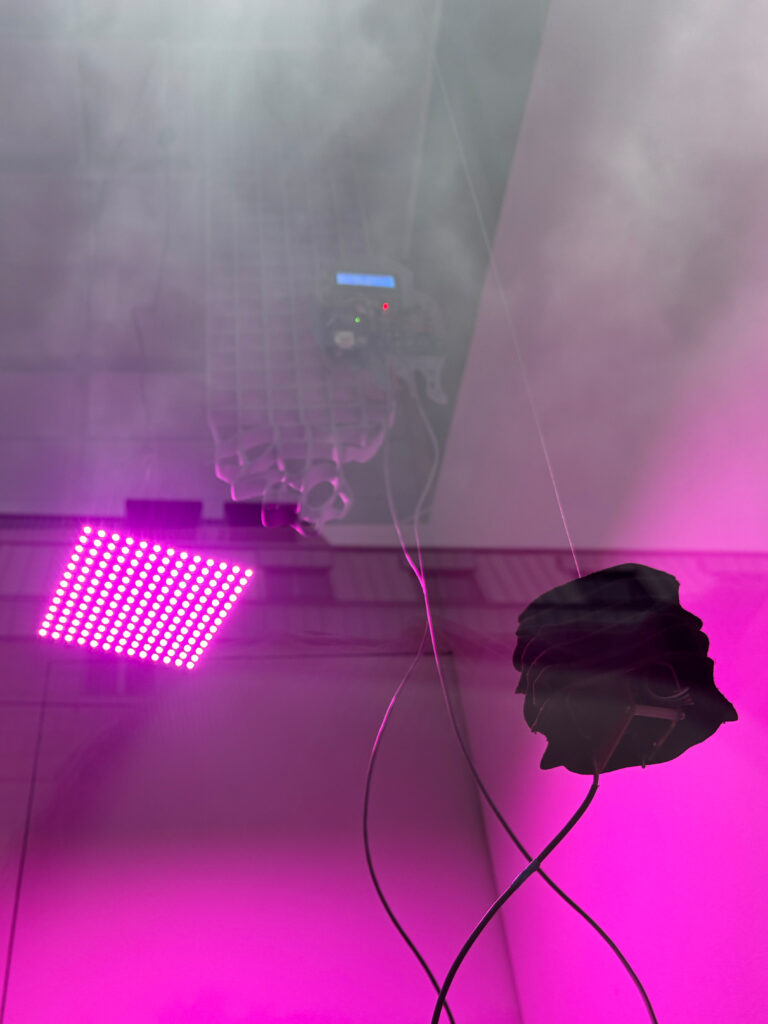
The overall installation Brook and brooklet haste below connects parallels about an uncertain future with impressions of an undisguised nature and humans seeking a place in it.
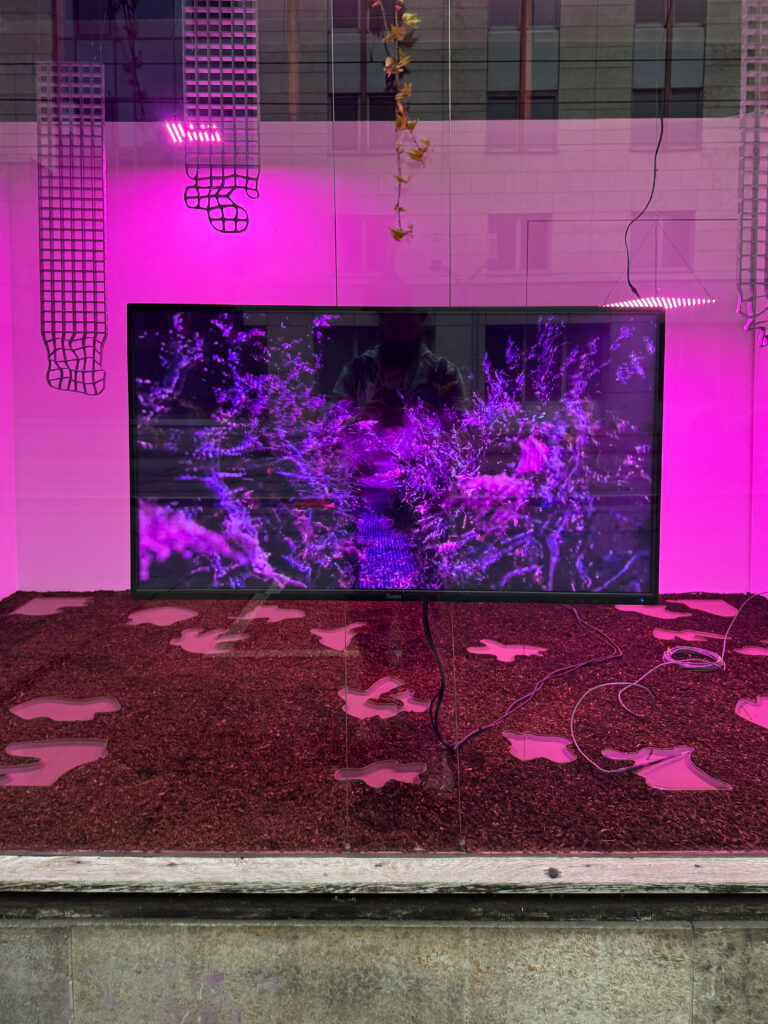
Stunning aerial images combined with close-ups of lush plant and animal life form the visual basis of the film Moors and Mires / Kirkpatrick Marsh. Several interview clips feature scientists working in the Kirkpatrick Marsh. They give an insight into the content of their work and their findings but also share their experiences about the specific conditions in which they carry out their research. Their facts and fictions, data and stories, both equally find a home in the beautiful images of the marsh. At various points, the documentary character tilts towards a more dark,
computer-generated fictional world; an “altered reality” that provides the setting in which tales of aliens, monsters and death find their natural habitat.
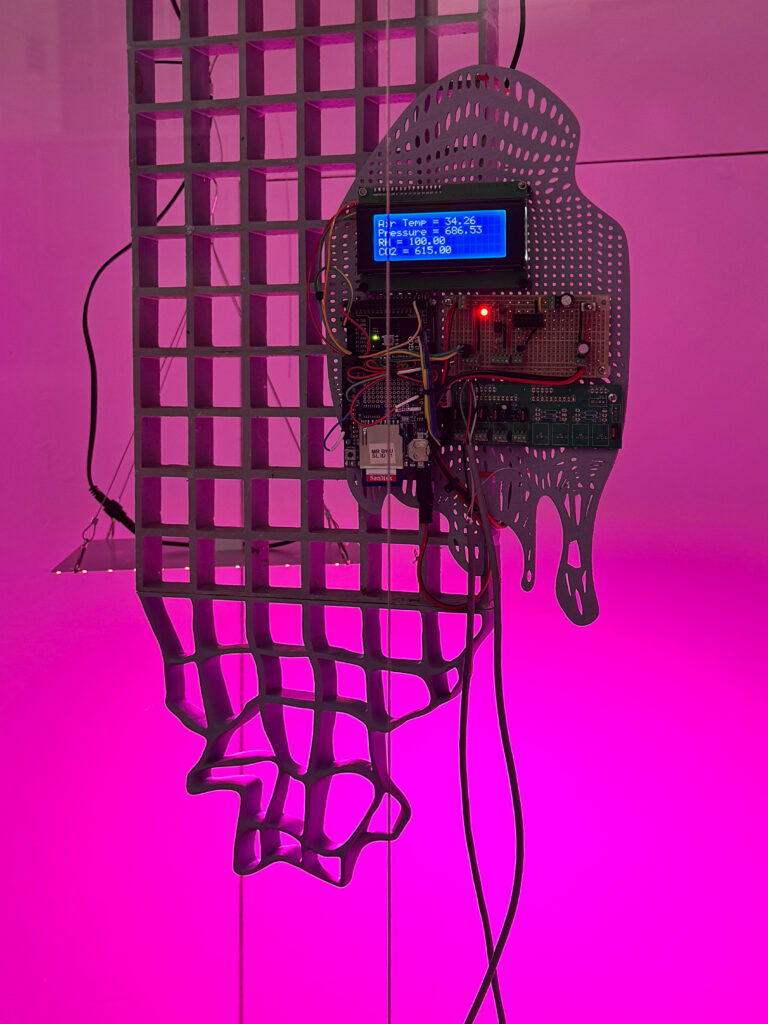
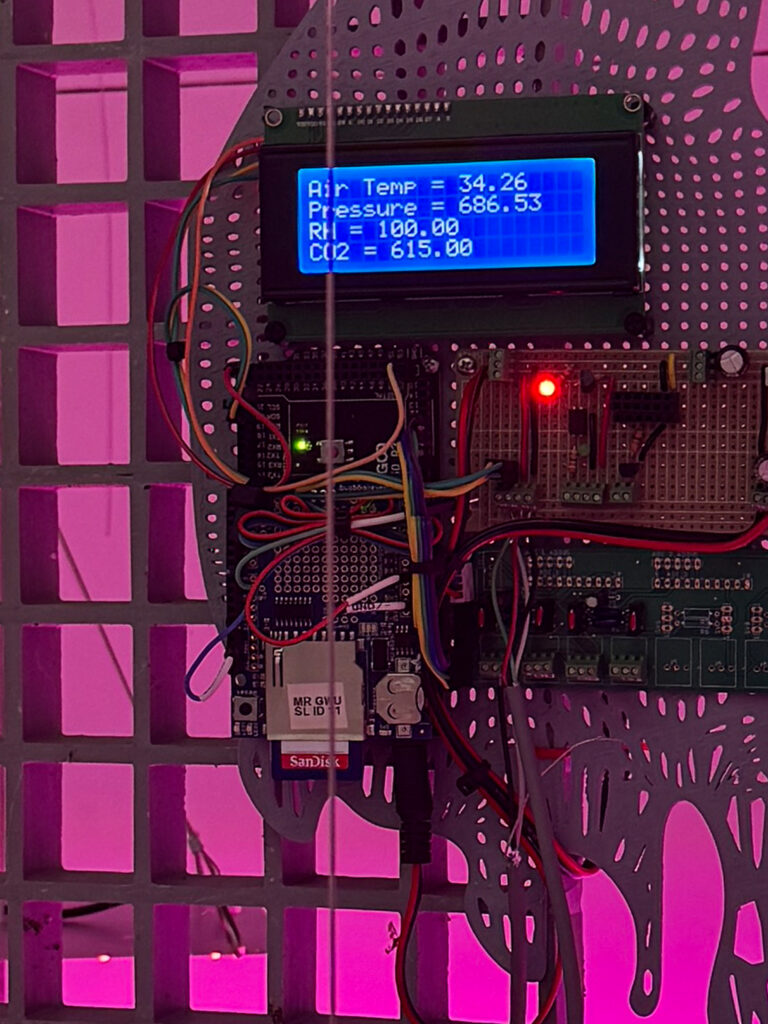
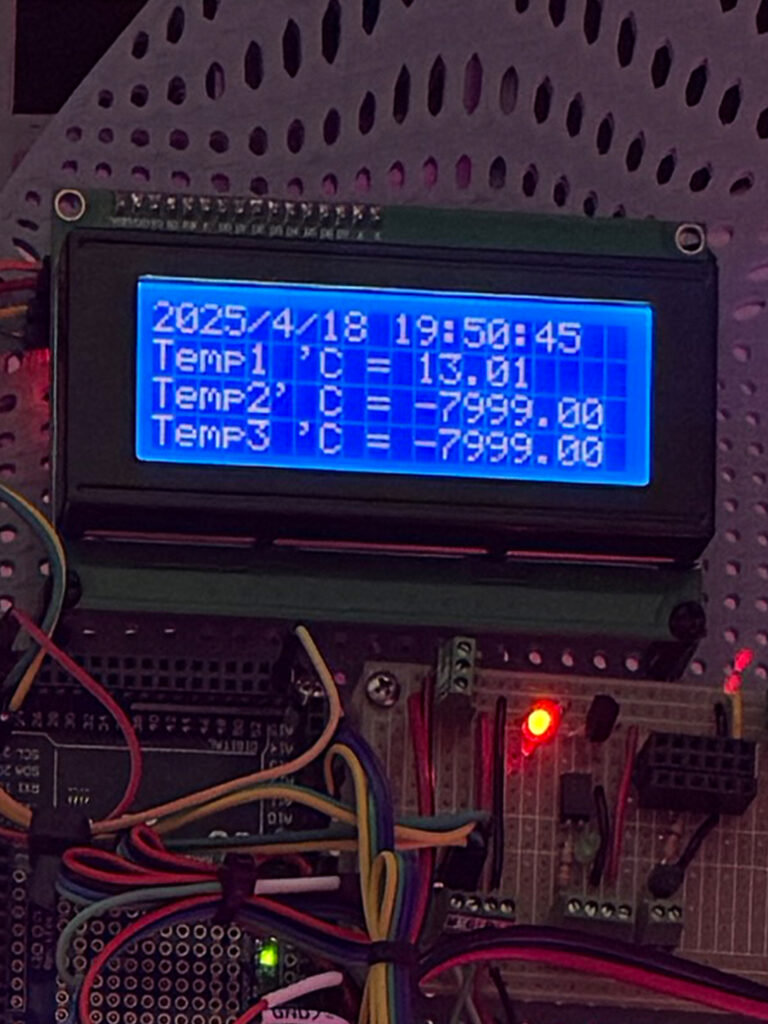
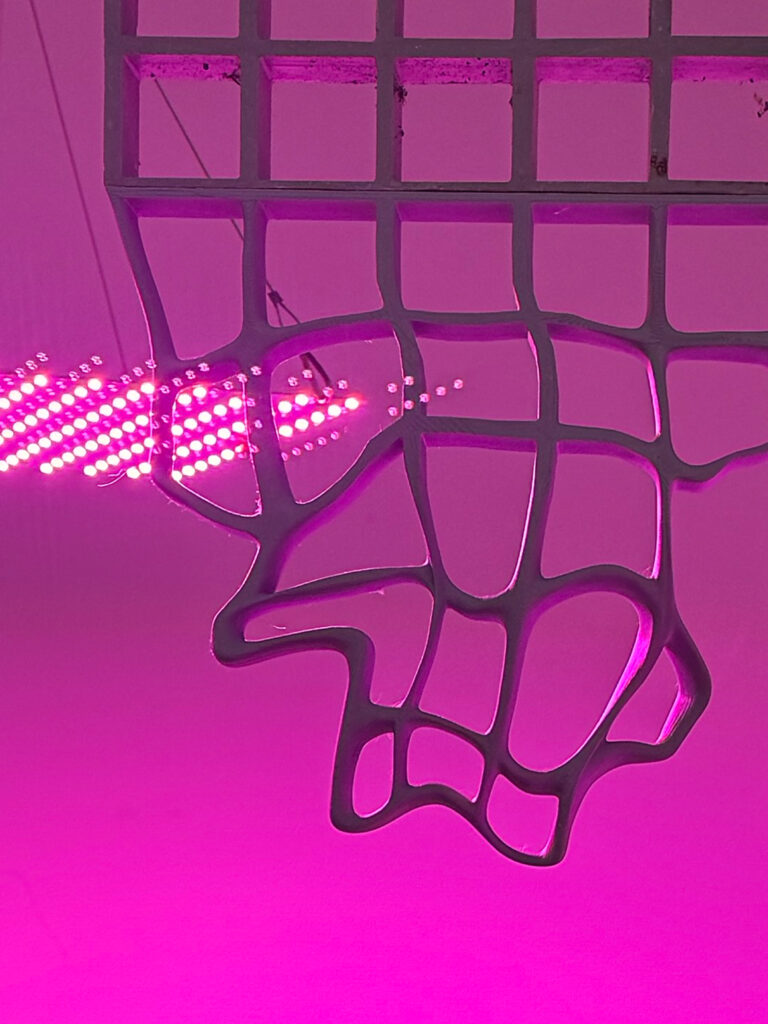
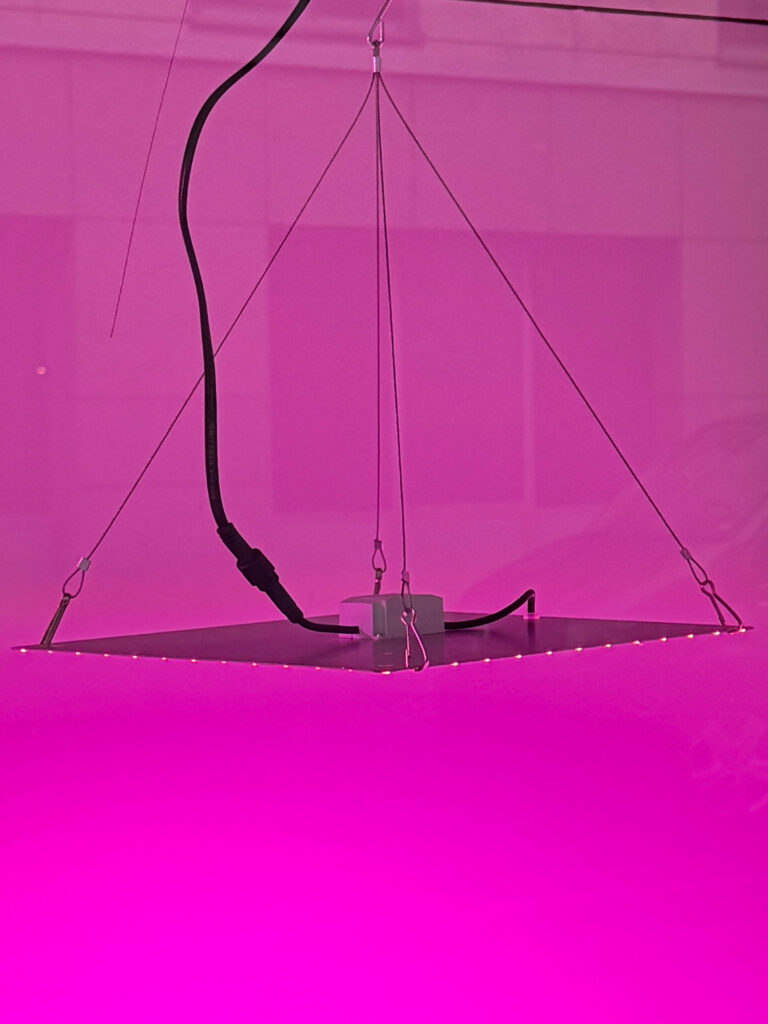
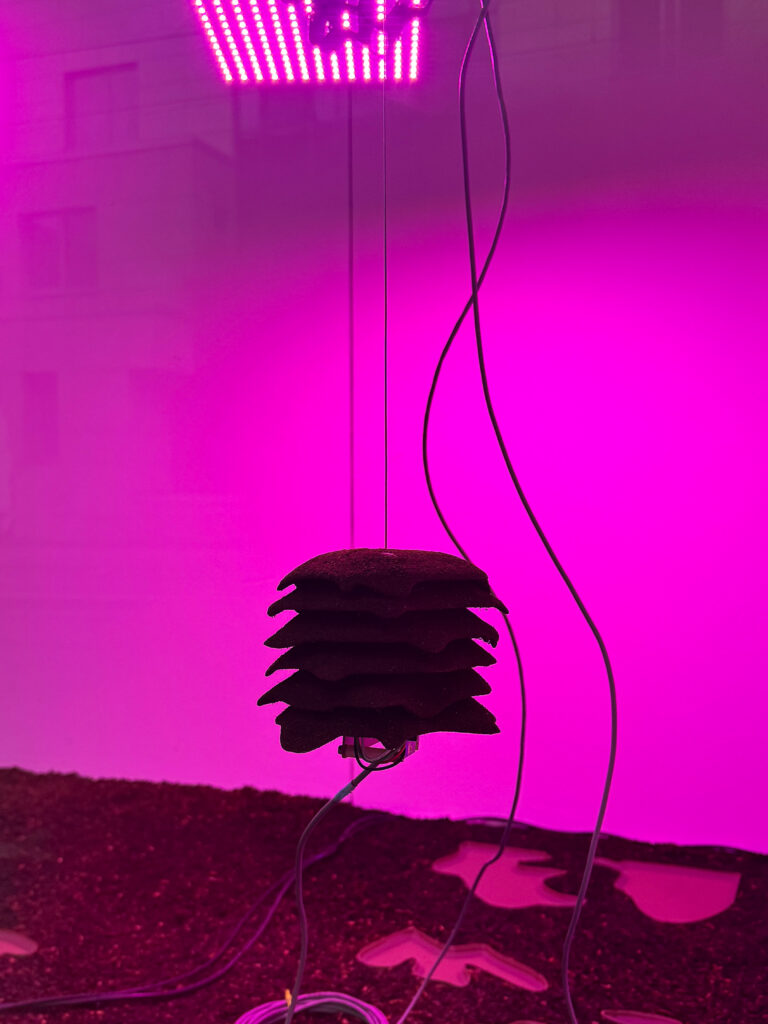
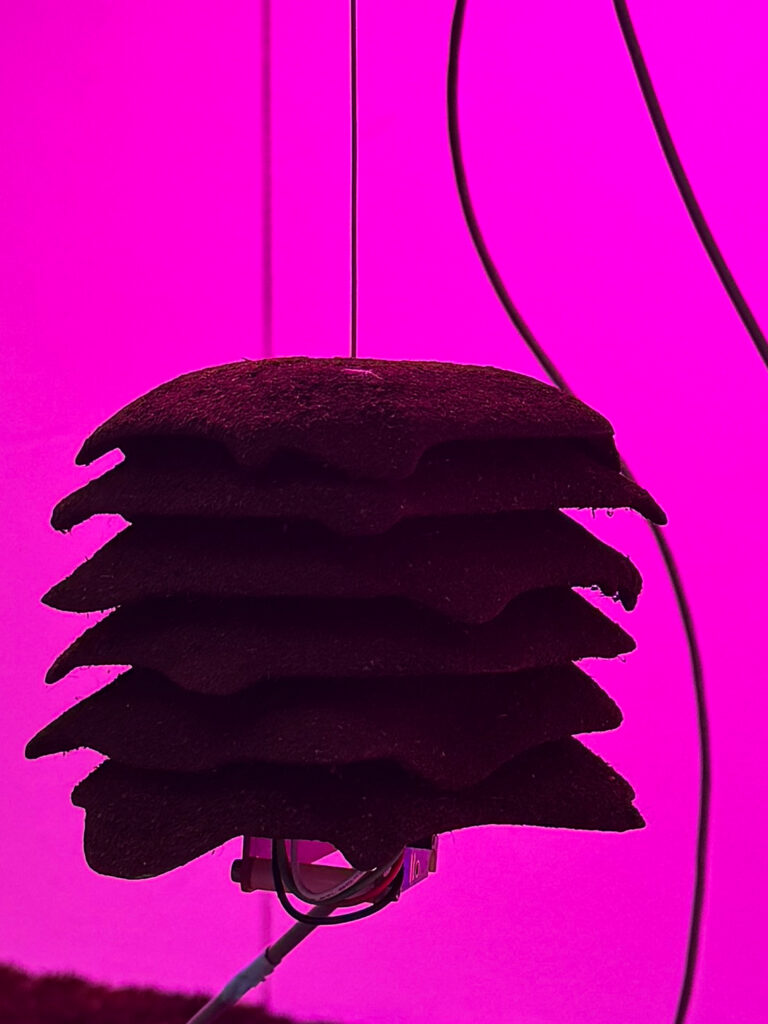
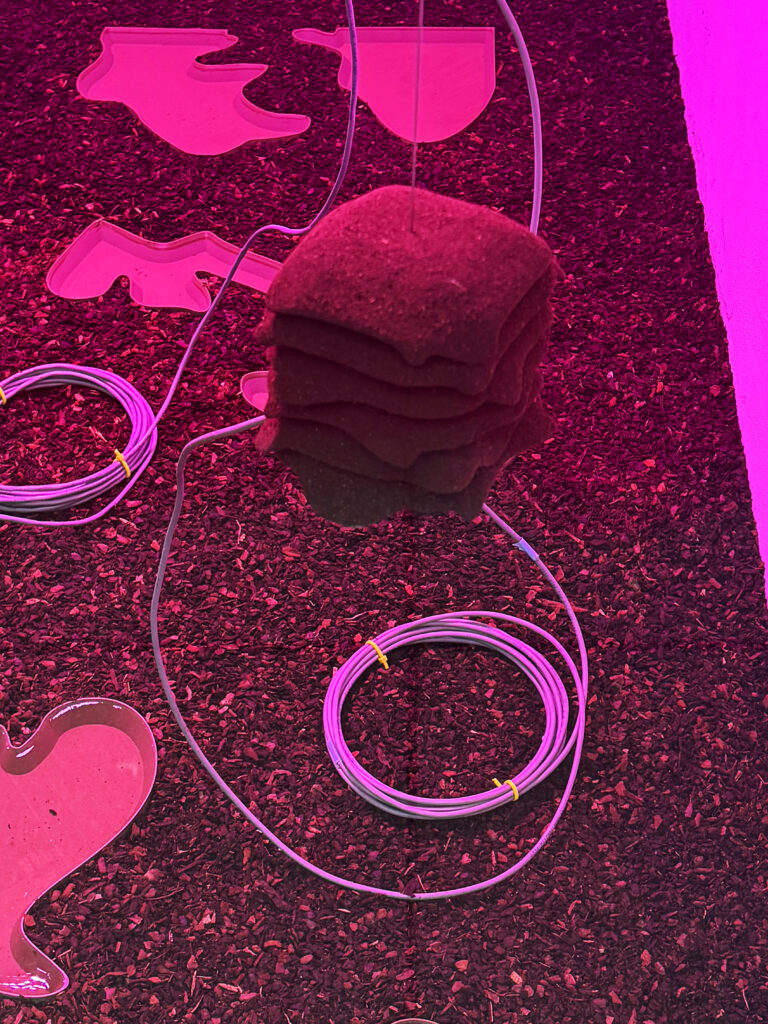
The spatial elements in the exhibition can be understood as visual echoes from the marsh, as in a dreamy vision from the future. The boardwalks, beautifully rendered via drone footage, take a vertical course at certain points and seem to melt or morph in other places. ‘Phragmites australis’, an invasive grass species originally from Europe, can grow at a top speed of one meter per week in Spring, quickly replacing all other vegetation. Phragmites Australis have existed for hundreds of years but have only been a real problem in the Kirkpatrick marsh the last thirty to fifty years because of the speed at which they become all-pervasive: ‚some plants will be winners, others will be losers‘. The magic and spiritual dimension that nature evokes is alluded to by the same colored light in the video as the lamps that cause the young ‘phragmites australis’ to grow in the dark. Furthermore, we recognize the octagonal structures and cubic elements that provide accurate measurements in the simulation experiments in the Kirkpatrick marsh using CO2 measuring equipment and blowers. In turn, in their octagonal structures, Eeraerts and Aparicio Ronda measure the CO2 concentration and soil temperature around the plants using SERC’s equipment. Lastly, the cubes house the sound system that provides the soundtrack in the exhibition.
In the exhibition, the gloomy science predictions merge seamlessly with the atmosphere created in folklore, sagas and myths in this thought-provoking installation that gets under your skin. At the same time, the conclusion of one of the scientists is as sobering as it is soothing: ‘It might not necessarily be good for humans, but earth itself is going to persist.’
(Text: Karen Verschooren)
www.elise-eeraerts.be
@elise.eeraerts
https://www.aparicioeeraerts.com/index.html
With the kind support of Akademie Schloss Solitude, STUK, i.c.w. Cas-co, City of Leuven, Smithsonian Environmental Research Center, Rosspartner Werbetechnik, GEISTUNDGELD e.V., SV SparkassenVersicherung, and Kulturamt Stuttgart.